2026 Entry Clinical Fellowship
Using long-read genome sequencing to improve diagnosis in unexplained leukodystrophies
Leukodystrophies, also called inherited white matter disorders, are genetic conditions that damage the brain’s white matter. White matter contains nerve fibres surrounded by insulation, which helps signals travel efficiently through the brain. People with leukodystrophies can develop problems with movement, balance, thinking, vision, seizures or swallowing, and symptoms may worsen over time. These conditions can affect both children and adults.
Leukodystrophies are inherited conditions caused by changes in a person’s genetic make-up. However, despite current NHS genetic testing, more than 40% of people with suspected leukodystrophy remain without a precise genetic diagnosis. This can leave patients and families without clear answers about prognosis, treatment options, inheritance, family planning and access to clinical trials.
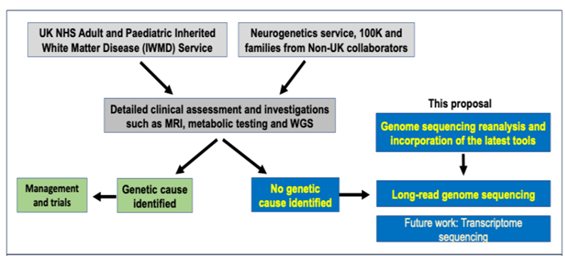
In this fellowship, I will study patients and families with unexplained leukodystrophies recruited mainly through UK NHS inherited white matter disorder services. I will re-analyse existing genetic data using updated software tools and use newer technologies, including long-read genome sequencing. Unlike standard sequencing, which reads DNA in short fragments, long-read sequencing reads much larger sections of DNA. This can reveal hidden genetic changes that are difficult to detect using standard methods.
This work aims to find new diagnoses for patients and families, improve understanding of the genetic causes of leukodystrophies, and identify which patients are most likely to benefit from long-read sequencing.
Because long-read sequencing is still a specialist and resource-intensive test, this project will help identify which patients are most likely to benefit from it and whether it could be used effectively in future NHS diagnostic pathways. It will also support a larger future study using long-read sequencing alongside other techniques, such as RNA sequencing, to further improve diagnosis and understand disease mechanisms.